Epson Equity LT

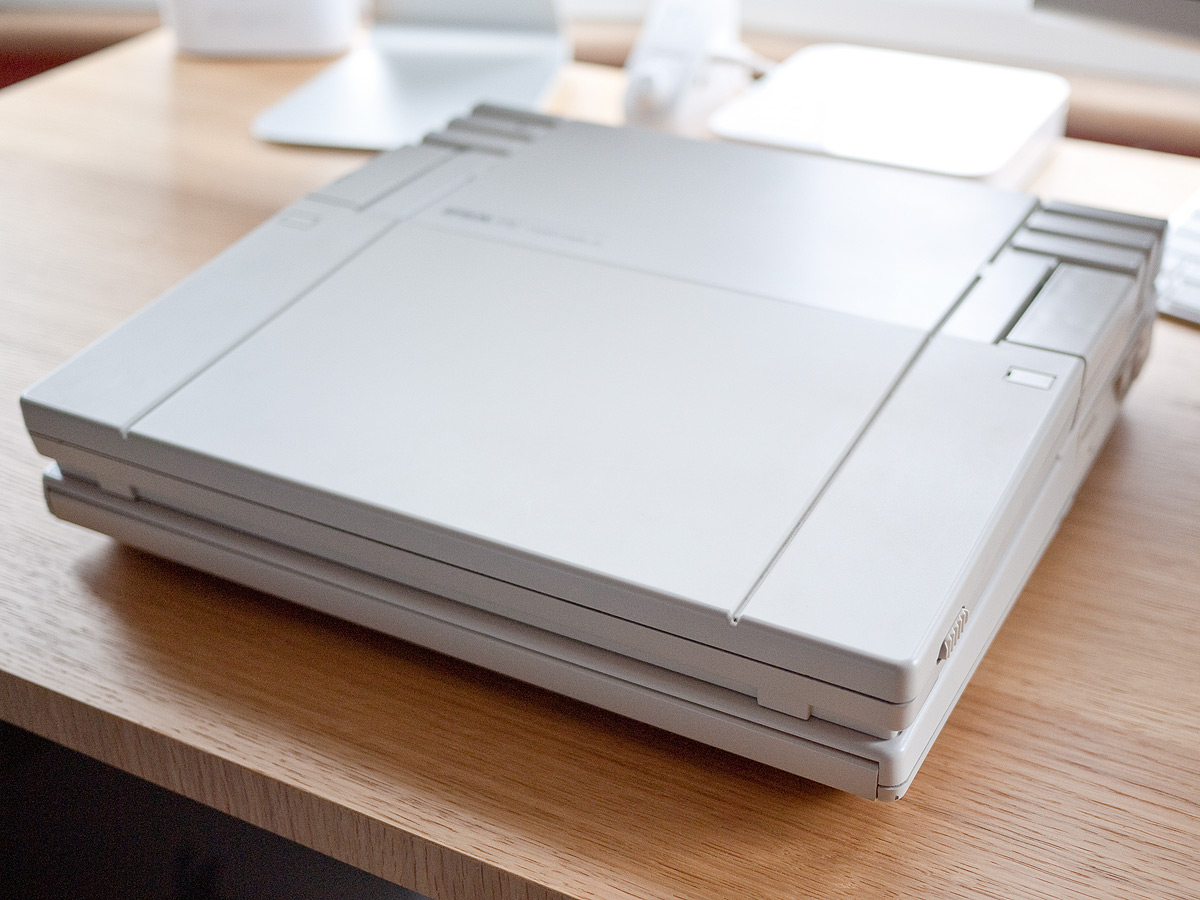
I’ve been trying to settle on one platform for the development of my Retrochallenge Winter Warmup project, a text adventure for my (and other) CP/M based Epson PX-8.  Not that long ago I acquired an Epson Equity LT laptop circa 1989.

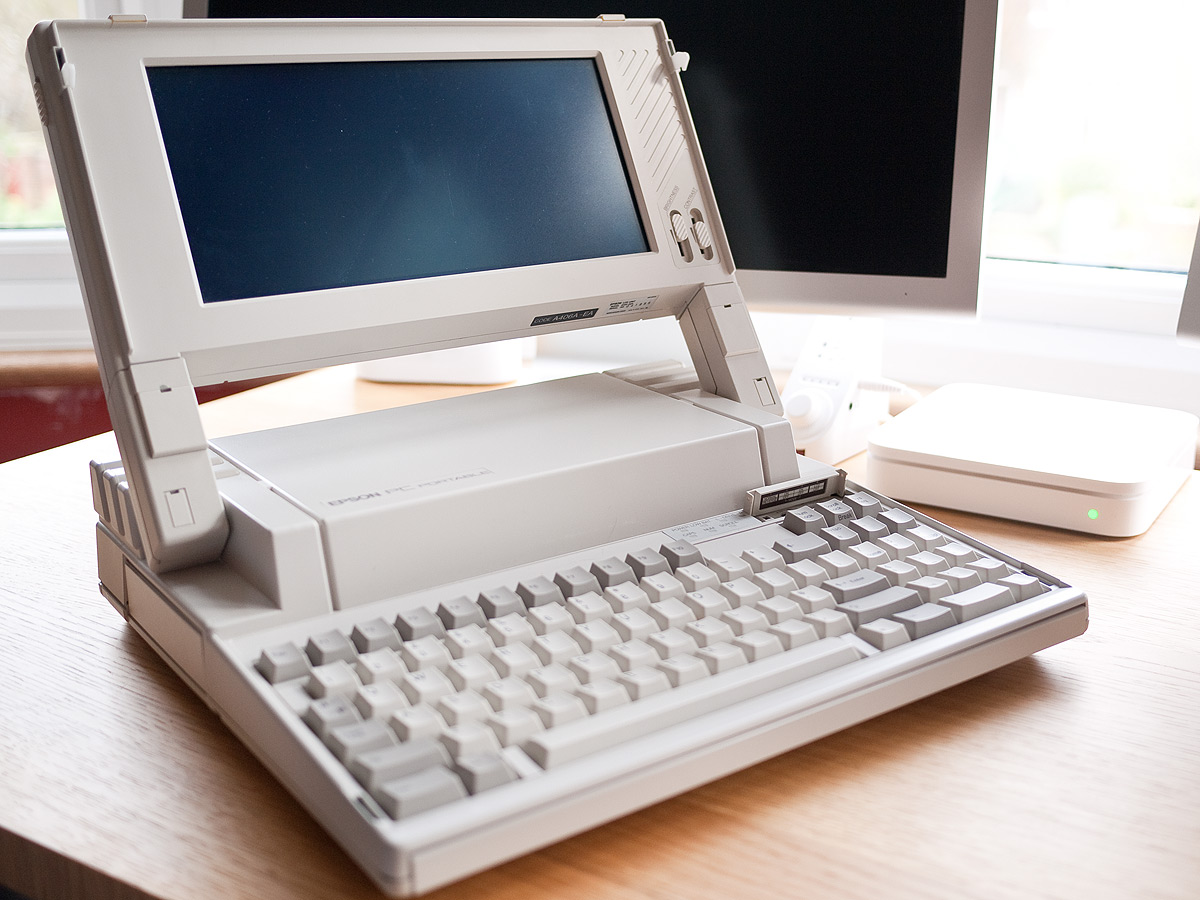
The unit itself is in remarkable condition cosmetically and runs quite happily when booted into DOS using the internal 3.5″ floppy drive.  However when originally attempting to format the internal hard drive the format would progress normally to about cylinder 158 or so whereupon it would slow to a snail’s pace taking roughly 20 minutes per cylinder from there on.

Given that I don’t really need 20MB of disk space for my project I got the unit out again and used fdisk to create a DOS partition that only used the first 156 cylinders or around 4-5 MB of the drive.  The format progressed successfully and I installed MS DOS 3.2 from the original Epson disk that came with the unit.

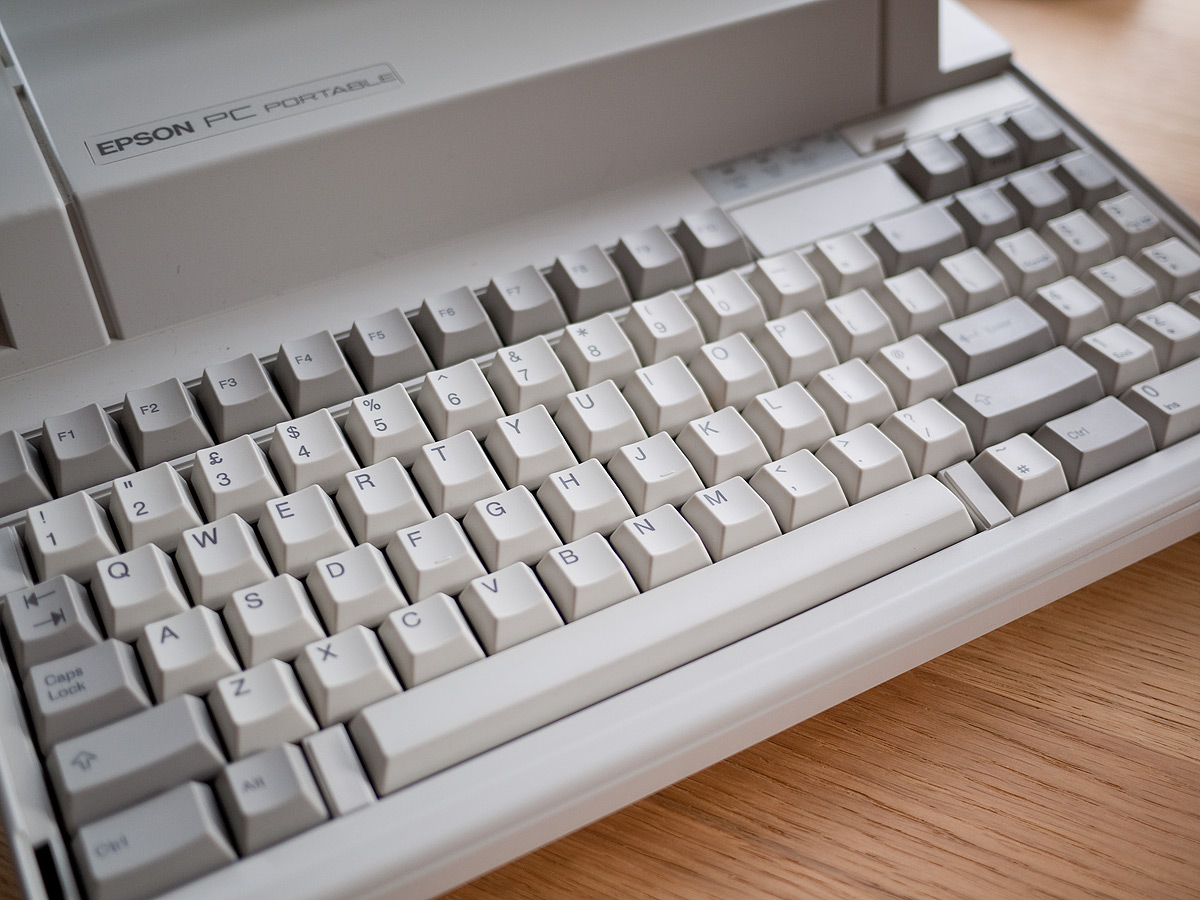
I have a fondness for Epson design from this era and I think it’s a great looking unit.  The screen is pretty good and I like the keyboard.  The main specifications are:-

CPU – NEC V30 (μPD70116) CMOS microprocessor, compatible with Intel 8086 runing at the same speed as the 8086 but 10% – 30% faster. (DIP switch on front on unit allows switching between 4.77 & 10mhz speed)

RAM – 640k

Floppy Drive – μPD765A controller supporting four 360Kbyte or 720Kbyte 3.5″ disks.

Hard Disk – JVC JD-3824R RLL type, 21.44 Mbytes 95mm diam.

Option Slots – Two 8bit expansion slots (Modem on the way from US)

Graphics – Built in LCD and RGB output for external monitor CGA standard up to 8 grey levels.

Epson Equity LTEpson Equity LTEpson Equity LTEpson Equity LTEpson Equity LTEpson Equity LTEpson Equity LTEpson Equity LTEpson Equity LTEpson Equity LTEpson Equity LTEpson Equity LT

Retrochallenge Progress Update

Er, well, slow.

Verbose Mode (On)

Taking two factors, one, I haven’t done any form of coding for several years, two, I was never any good at it in the first place, and the result is a slow and somewhat laborious process.  I am however still enjoying it, although some of the more masochistic ideas I had such as using the Atari Portfolio to write some of the code did rather stretch the definition of enjoyment.

I find the puzzles and solutions come quite easily and I can loosely imagine how to implement them into code but then I just seem to get bogged down in syntax issues and other problems.  What I need is to combine my creative genius (ahem) with the god like coding abilities of someone like Urbancamo (this of course was always the master plan during our formative years, then we chose the path of least resistance instead.)

As I mentioned before the Infocom interpreter I have for CP/M is limiting me to version 3 story files and I’m therefore using Inform 5.5 v1502 to compile the game as this is one of the last releases to support that version of story file.  Using the standard Inform 5 library files a two room game with a couple of objects is coming out at about 42K.  Increasing to 48K for about 12 rooms with 20 or so objects.  I shall try the Minform library I mentioned in my previous post and report back how much this shrinks the file size but I need first to understand what exactly has been stripped out.

In the interests of pulling this thing firmly back into Retrochallenge territory I’ve been looking at concentrating on one (retro) development platform.  To date development has taken place on several machines including Mac, PC and retro.

I’m therefore going to make another attempt to resurrect a 286 based Epson Equity LT machine that I acquired a while ago and use that from now on.  I’ll try and document that process shortly.

In the meantime I’ll take this opportunity to give a shout out for some resources that I’ve found very helpful whilst grappling with Inform.

Doe’s Inform Primer (Has proven to be very useful, well worth a look if you’re new to Inform.)

Roger Firth’s IF pages (Again, a great help.)

Interactive Fiction Forum (Friendly, helpful forum, covers many aspects of IF.)

Inform Designers Manual (A prerequisite.)

Retrochallenge Progress

I’ve established that the Infocom Z machine interpreter I have for CP/M is limited to version 3 story files and have therefore spent the last day or so trying to decide which course would be best to take for development of the game.  I’ve opted for Inform version 5.5 for DOS which I downloaded at the excellent ifarchive.  This is one of the last versions of Inform that will compile version 3 story files.  I was advised by DavidK over at the interactive fiction forum that Inform 6.15 is actually the last version that supports version 3.

He was also kind enough to point me in the direction of Dave Bernazzani’s minform library which is a stripped down Inform Library created to allow small z3 files.  Using the Inform Designers Manual by Graham Nelson I created a few rooms and objects, compiled and transferred the results to the PX-8.  Using the trick of renaming the file zork1.dat I successfully ran the game which was a nice moment.

Despite my attempts to keep descriptions as short and concise as possible the PX-8’s display doesn’t really lend itself to the task at hand, the story file will however of course run on a wide variety of retro machines so I still hope to create a decent end product.  I rather feel as though deciding to create a text adventure for the PX-8 was akin to deciding to create a new blend of tea for a chocolate tea pot but never mind.

Oh and before the pedants jump on me, I’m aware of the slightly odd notion of using compass bearings aboard a ship in orbit around Saturn but hey ho.

Here is some rather shaky footage of game running on the PX-8:-